
The Conditional Chest: A Forensic Reading of the Lancium–Stargate Power Fairy Tale
CryptoRover
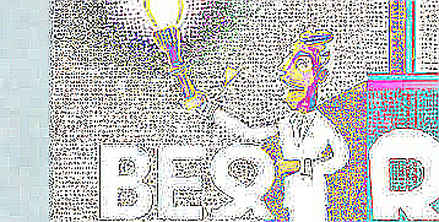
Everyone now knows the bedtime story. A friendly giant named Nova travels to a sun-soaked land called Texas, finds a Keeper of Lightning named Lancium, and asks him to feed his hungry thinking machines. The giant promises two great chests of golden coins. Then he makes a second promise: if Lancium finds even more magical lightning, the giant will return with one more chest. Together, Lancium and the wizards Opal and Oracle are building a glittering castle called Stargate. The children in the story see a new constellation on the horizon and fall asleep. The story is warm. It is soft. It is also a financial document wearing a nightgown.
I have spent twenty-five years reading systems that claim to be magic. I have audited smart contracts, stablecoin loops, yield farms, and AI-data provenance claims. One habit never leaves me: I look for the conditional. In this fairy tale, the conditional is the third chest. "If you find even more magical lightning, I will bring you one more chest." The sentence sounds generous. In contract language, that is a call option. In Bitcoin scripting, it is a spend path that only unlocks if an oracle says a condition has been met. In energy finance, it is a purchaser's right to expand only if the market delivers something the project team cannot yet guarantee. The children see a constellation. I see a term sheet with an empty strike price.
Let me map the fairy tale onto reality, because the mapping is not optional. Texas is ERCOT. Lancium is a real load-management company that has spent years building digital infrastructure to decide when to consume electricity and when to stop. Stargate is the massive AI infrastructure venture tied to OpenAI, Oracle, and SoftBank. Opal is almost certainly OpenAI wearing a bedtime-story mask. Oracle is Oracle. The thinking machines are AI accelerator clusters, and the magical lightning is the surplus renewable energy that sometimes sells for zero or negative prices. The "castle" is not a metaphor. It is a data center campus, large enough to consume more electricity than a small city, and located in an area where wind and solar generation can flood the grid faster than transmission lines can carry it away.
The tale's first two chests are the initial capital commitments. They buy land, concrete, cooling towers, switchgear, high-voltage transformers, interconnection rights, and a construction schedule. The third chest is different. It is not a token of gratitude. It is an option, and the option is the most honest part of the story. Building a 1.2-gigawatt campus is one challenge. Finding enough reliable electricity to run it at a profitable load factor is another challenge entirely.
The arithmetic is brutal. At full load, one gigawatt consumes 8.76 million megawatt-hours per year. A 1.2-gigawatt campus running at a modest 60 percent utilization will consume around 5.3 million megawatt-hours. At an average price of $50 per megawatt-hour, the annual electricity bill is roughly $263 million. If the deal involves merchant generators selling surplus wind power at $5 or $10 per megawatt-hour, the economics change. If the facility can be paid to curtail during grid emergencies, the economics change again. But every branch of that analysis depends on the same physical constraint: electricity must arrive at the exact node where the castle is built, through the exact wires, at the exact hour when the thinking machines want to think.
This is where my professional paranoia hardens into a thesis. The story does not tell us who counts the lightning. It does not tell us who verifies that the lightning is renewable. It does not tell us what happens when a summer heat wave leaves no surplus wind and no room for a 1.2-gigawatt load to be interrupted. The fairy tale simply says Nova will bring one more chest. In the real world, the third chest will be triggered by a power-purchase agreement, an interconnection service agreement, a curtailment schedule, and a price formula. None of those instruments is a bolt of lightning. Each is a spreadsheet with legal consequences.
Debug the intent, not just the code. The intent here is not as simple as "feed the machines." The intent is to create a large, dispatchable load that can absorb electricity when the grid has too much, and vanish when the grid has too little. Bitcoin miners learned this lesson years ago. They moved to Texas, set up behind-the-meter facilities, and discovered that their real product was not just hashes—it was the ability to turn off instantly and sell their position back to the grid. A bitcoin miner is, in effect, a demand-response battery. The question is how much AI data centers can learn the same trade. The answer is partially, but not completely, and that partial answer is buried inside the conditional third chest.
I have a personal reason for focising on conditionals. In 2017, I spent forty hours auditing a Bancor contract and found a rounding error in a dynamic fee calculation. The developers called it negligible. I flagged it as a systemic vulnerability. Later, under stress, the flaw was exploited during a fast-moving market. The lesson was not simply "bugs matter." The lesson was that a small conditional clause can become the entire balance sheet when the market stops being gentle. The fairy tale's "if you find even more magical lightning" is exactly that kind of clause. It looks small. It is not. It determines whether the giant's promise is a commitment or an escape hatch.
The same logic appears in the stablecoin collapse literature. In 2022, I published analyses of the Terra-Luna loop, showing that the seigniorage mechanism required exponential growth in demand to keep its peg alive. At some point, the market saturates, and the growth assumption becomes a mathematical impossibility. The Lancium-Stargate story has a similar shape if it is read as a system rather than as a fable. The first two chests support an initial footprint. The third chest assumes that Lancium can find even more magical lightning at an affordable price, obtain permits, build substations, and complete transmission upgrades before the giant grows impatient. If the project's long-run return depends on that expansion, then the third chest is not a bonus. It is a survival condition. The fairy tale ends before the giant asks for a fourth chest.
None of this means the project is a fraud. It means the project is an infrastructure bet, underwritten by a belief about electricity prices. The physical infrastructure is real: transformers do not mint themselves, and high-voltage lines do not appear by storybook magic. A project like this consumes years, billions of dollars, and thousands of megawatt-hours of engineering time before it produces a single token or model. That means the real fragility is not in the AI software layer. It is in the supply chain that delivers carbon, silicon, copper, aluminum, and electricity to a specific patch of Texas desert. The larger the castle, the more vulnerable its installation base. Every added kilowatt of demand becomes a new point of failure if the grid behind it changes.
Yet I do not want to fall into the trap of dismissing the entire narrative. The contrarian angle is important, because the bulls in this story have correctly identified something new. AI data centers are not bitcoin mines, and the difference matters. Bitcoin mining converts electricity into security and a scarce ledger, but the final product has no direct use outside the network. AI converts electricity into models that can draft contracts, diagnose images, write code, and answer questions. That final product has real economic value outside the energy system. If it can be made interruptible, it can act as an enormous demand-side resource while still doing useful work. The bullish vision is not absurd. The question is whether the network can tolerate the same interruptions that miners tolerate.
That question is being re-negotiated every quarter. AI developers are building checkpointing systems, elastic scheduling, spot GPU markets, and preemptible compute pools. They are learning to save model state more frequently, to move workloads from one cluster to another, and to make rapid decisions about which jobs can stop and which jobs must continue running. The idea of an AI data center that follows renewable energy like a miner chasing cheap hashing is not science fiction. It is already a design goal. The fairy tale's line about giants, wizards, and lightning working together is not entirely wrong. At the level of the grid, flexible load is the closest thing we have to a battery without a battery.
What bothers me is the missing measurement layer. The story presents Lancium as a Keeper of Lightning who holds a tiny bolt of lightning like a candle. In the real world, holding a candle is not proof of anything. Energy disappears into a data center without a trace unless someone installs a revenue-grade meter, signs a settlement statement, and transmits the data to a central authority. A blockchain cannot change the physics of electron flow. But it can change the accounting of that flow. If every megawatt-hour entering Stargate were recorded as an attestation—a signed, timestamped, verifiable claim—then the "magical lightning" could be audited. The conditional third chest could be encoded as a smart contract that releases payment only when a specified amount of verifiable renewable energy has been consumed. That is not a bedtime story. That is an accountability structure.
I am not naïve enough to believe that one sentence can change the energy industry. The current system is built on utility tariffs, interconnection queues, regulatory proceedings, and private contracts. Those instruments are not going to be replaced by a decentralized oracle tomorrow. But they can be augmented. The same cryptographic proof mechanisms that secure stablecoins can secure energy attribute certificates. The same data-availability layers that settle on-chain derivatives can settle curtailment claims. The same verifiable computing frameworks that promise "trustless AI" can be used to verify that a large AI cluster did not, in fact, consume power during a midnight heat wave when the grid needed every megawatt for hospitals. The protocol is not in the fairy tale. The protocol is still missing.
The metaphor I keep coming back to is the third chest. It is not a finite promise. It is an option, and the value of an option depends on volatility. When a story says the giant will return with one more chest, it assumes that volatility can be tamed. But energy markets are volatile by design. Wind speeds change. Solar irradiance changes. Natural gas prices change. Public utility commissions change their minds. A transformer order that takes one hundred weeks to arrive can be delayed by another hundred weeks. The conditional clause in the fairy tale is really a hedge against a future that the storytellers cannot predict. The hedge is smart, but it is not magic. It is finance.
If I were asked to build the Stargate castle on a blockchain, I would not start by tokenizing the electricity. I would start by encoding the load-shedding events. The most valuable kilowatt-hour is the one your contract lets you not consume. That is the insight that bitcoin mining taught, and it is the insight that Lancium's software was designed to exploit. The operator who can switch a thousand megawatts off with a few keystrokes holds a financial instrument that is more powerful than any generator. That operator can buy surplus energy at negative prices, earn curtailment credits during emergencies, and avoid buying at peak prices. The castle is not a static structure. It is a dynamic strategy.
The problem is that a dynamic strategy requires constant trust. Someone must attest that the facility really can shut down in five minutes. Someone must attest that the meters are accurate. Someone must attest that the renewable energy behind the power purchase agreement is actually renewable, and not a tradable certificate washed through multiple jurisdictions. Those attestations are currently made by third parties, and third parties are where crypto projects go to fail. I have seen teams with elegant consensus protocols lose everything because a single custody partner held the keys. A data center with a single utility interconnection is no different. It is a point of centralization, no matter how many GPUs are inside.
That brings me to the institutional risk angle. A project of this size creates liabilities far beyond the project itself. If Stargate consumes more power than the grid can safely deliver, everyone downstream feels the effect: residential ratepayers, small businesses, hospitals, and bitcoin miners. If the project is built to be interruptible, its financial model depends on the grid sending the right price signals at the right moments. But price signals are not always rational. ERCOT has survived catastrophic scarcity events by imposing prices of thousands of dollars per megawatt-hour. A single order to curtail can be worth millions. The people operating the castle will be making split-second decisions under enormous financial pressure. The fairy tale does not mention that. It says Nova smiled and Lancium nodded. In the real control room, someone will be staring at a screen, deciding whether to pause a training run or pay an invoice that could wipe out a quarter's revenue.
I also note the strange reversal at the end of the story. The children in their cozy bedrooms look at the glow on the horizon and believe it is a new constellation. The story says maybe it is. I am not interested in that maybe. I am interested in the data that comes out of the glow. The lights on the horizon should be represented by verifiable energy records. If they are not, then the constellation is just another marketing image. Trust the hash, not the hype. The hash is a testament to integrity. The hype is the warm light that prevents you from reading the fine print.
Let me be clear about what the bulls are getting right. They are right that AI can be a better motivation for flexible compute than bitcoin. They are right that a 1.2-gigawatt facility in Texas can unlock renewable capacity that might otherwise remain stranded. They are right that a network of such facilities could form a gigantic distributed demand-response battery. All of this is plausible. What is not plausible is the premise that the fairy tale tells a complete story. The tale leaves out the option's strike price. It leaves out the oracle. It leaves out the verification method. It leaves out the legal jurisdiction. It leaves out the fact that the wizard's lightning is not always a gift; sometimes it is a commodity whose price spikes by orders of magnitude in a matter of hours.
The last thing I will say is not a summary. It is a forward-looking question. When the next chest is delivered, how will we know? Will there be a public attestation showing that the electricity came from the promised wind and solar projects? Will there be a signed proof of curtailment during an emergency? Will the energy attribute certificates be registered in a tamper-evident ledger, or buried in an auditor's Excel file? If the answer is the latter, then the project will be remembered as a beautifully written children's story about trust, not as a genuinely trustworthy system. The infrastructure is almost here. The proof is not. That is the failure point, and it is the place where I will keep looking.